The Feast of the Cross is a special celebration in the Coptic Orthodox Church, commemorating the Cross of our Lord Jesus Christ and its central place in the Christian faith. Traditionally, the feast is celebrated over three days. During the services, the church focuses on the Cross as the sign of Christ's victory, salvation and love for humanity.
The feast is a time of joy, thanksgiving and reflection on Christ's sacrifice for us. A central part of this observance is Matins (Morning Prayer).
To mark this blessed occasion, Matins will be celebrated at 8:00am at St John's this Sunday.
What are Matins?
Matins is a morning prayer service of the Church, traditionally offered at the beginning of the day. It includes hymns, prayers, Scripture readings and praises that prepare the faithful to worship God and celebrate His work in our lives.
We warmly invite everyone to join us for this beautiful service as we gather together in prayer and thanksgiving, honouring the Holy Cross and remembering the love of Christ revealed through it.
Sunday, 8amMatins for the Feast of the CrossMorning prayer before the Divine Liturgy. Everyone is welcome.
Praying on Sunday
Fr Luke
This week at St John's
Wed
Early Liturgy, 5 to 7am
Thu
Morning Liturgy, 8:30 to 10am Bible Study, 6:30 to 7:30pm Kids Karate (ages 7+), 6:30 to 7:30pm English Classes, 6:30 to 7:30pm Tasbeha, 7:30 to 8:30pm Babysitting available, 6:30 to 8:30pm Mothers Meeting, every second Thursday
Sat
Divine Liturgy, 8:30am Vespers, 4:30pm
Sun
Matins for the Feast of the Cross, 8am, before the Liturgy No Kids Liturgy this week The Way: coffee and a chat to delve deeper into our faith, 11 to 11:45am
In the Gospel, our Lord Jesus Christ tells His disciples that they are blessed because they have seen and heard what many prophets and righteous people longed to see and hear but never did:
"Blessed are your eyes, for they see, and your ears, for they hear; for assuredly, I say to you, that many prophets and righteous men desired to see what you see, and did not see it, and to hear what you hear, and did not hear it." (Matthew 13:16–17)
We often think of being "lucky" in terms of success, good fortune, possessions or favourable circumstances. But Christ points us towards a much deeper kind of blessing. We are blessed because we have received the Gospel. We have the opportunity to see Christ, hear His Word, and know the message of salvation.
The Church reminds us of these words regularly through the litany before the Gospel: "Blessed are your eyes, for they see, and your ears, for they hear." These are not simply beautiful words to repeat. They are a reminder of the extraordinary gift we have received.
But if we truly believe that we are blessed to have the Word of God, it should change the way we live.
1. We experience the Word more deeply
When we recognise that something is precious, we naturally spend more time with it.
Imagine living in a home with a beautiful view of the harbour. If you truly appreciate that view, you will sit down with your morning coffee and take the time to enjoy it. If you do not recognise its value, you may hardly notice it.
The same is true of the Word of God.
The Scriptures are not simply an ancient book containing information about God. The Church describes the Word of God as living, because God continues to speak to us through it.
"For the word of God is living and powerful, and sharper than any two-edged sword." (Hebrews 4:12)
The same passage of Scripture can speak to us differently at different stages of our lives. A verse that we read years ago may suddenly take on a new meaning when we encounter a particular challenge, joy or circumstance.
If we recognise how blessed we are to have the Word of God, we will want to engage with it every day. We will make time to open the Scriptures, read them prayerfully, and ask what God is saying to us in our present circumstances.
"Your word is a lamp to my feet and a light to my path." (Psalm 119:105)
The Word of God is not merely something we study. It is something we live with.
2. We share the Word with others
When we receive something that is genuinely good and precious, we naturally want to share it.
If we recognise the Gospel as a gift, then evangelism becomes a natural response to that gift. It does not have to be aggressive or forced. It can begin with something as simple as an invitation.
Many people think evangelism is the responsibility of priests, missionaries or preachers. But sharing the Gospel belongs to every Christian.
Jesus told His disciples:
"Go into all the world and preach the gospel to every creature." (Mark 16:15)
Sharing the Gospel does not always require a sermon or a formal evangelistic program. Sometimes it begins with inviting a neighbour, a friend or a colleague to church. It might be an invitation to attend a service, join a fellowship gathering, or simply have a coffee and conversation.
Our parish provides many opportunities for this. We can invite someone to experience our church community, our fellowship and the Upper Room Café. We can introduce someone to the Scriptures or simply begin a conversation about faith.
There are also free copies of the Gospels available at the café. The fact that these Gospels regularly need to be replenished is a reminder that people are seeking. People are hungry and thirsty for the Word of God.
Christ said:
"If anyone thirsts, let him come to Me and drink." (John 7:37)
We have received something precious. We should not keep it to ourselves.
A simple invitation may seem small to us, but God can use it to have a profound impact on another person's life.
3. We practise the Word of God
Finally, recognising our blessing should lead us not only to hear the Word, but to live it.
In the Gospel, a lawyer asks Jesus what the greatest commandment is. Christ points him towards loving God with all his heart, soul, strength and mind, and loving his neighbour as himself.
"You have answered rightly; do this and you will live." (Luke 10:28)
Knowing the right answer is not enough. Hearing the Word is not enough. Even reading the Scriptures every day is not enough if the Word does not change the way we live.
St James tells us:
"But be doers of the word, and not hearers only, deceiving yourselves." (James 1:22)
When we truly recognise that we are blessed to have received God's Word, it should begin to shape our decisions, our relationships, our priorities and our daily lives.
The Word should move from our ears into our hearts, and from our hearts into our actions.
4. We are blessed
Today, Christ reminds us that we are blessed people.
We are blessed because we have been given the opportunity to hear the Gospel. We are blessed because we can know Christ. We are blessed because we have access to the living Word of God.
This blessing comes with a responsibility.
May we recognise the precious gift we have received. May we engage with God's Word daily. May we share it naturally and lovingly with those around us. And, above all, may we practise it and allow it to shape the way we live.
"Blessed are those who hear the word of God and keep it!" (Luke 11:28)
May we truly understand how blessed, and how fortunate, we are to have received the Gospel, so that we may experience it, share it, and live it every day.
Glory be to God forever. Amen.
Saints of St John's
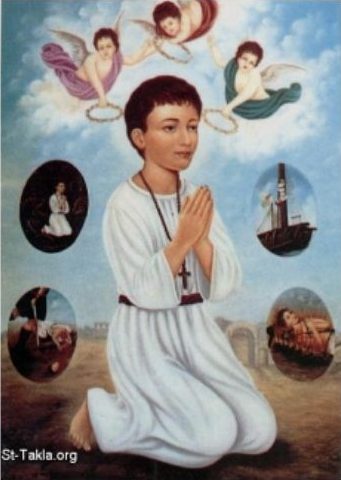
St Abanoub
Feast day: 24 Epip · 31 July
Who was he? St Abanoub of Nehisa was a young Egyptian martyr, traditionally remembered as being only twelve years old. During the persecution of Christians, he chose to confess his faith in Christ with remarkable courage and is especially loved by Coptic children and families.
What can our family learn from St Abanoub?
1. You are not too young to take God seriously
St Abanoub was only a child when he heard the Church urging Christians to remain faithful during persecution. He received the Sacraments, prayed for guidance and made a deliberate decision to live as a Christian courageously.
What it means for our family: Children are not simply "future Christians." They can pray, forgive, serve, be generous and make brave choices now. Adults also need to be careful not to underestimate the spiritual depth children are capable of.
Family challenge: Let the children choose and lead one part of family prayer: a Bible reading, a prayer for someone, a hymn or an act of service.
2. Generosity comes before the big moment
Tradition remembers that before St Abanoub set out to confess his faith, he gave his possessions to those in need. His courage was connected to a heart that was already learning not to cling tightly to what belonged to him.
What it means for our family: We often think generosity is about how much money we have. For children it may mean sharing a favourite thing; for adults it may mean giving time, attention, money or comfort. A generous heart becomes freer to follow God.
Family challenge: Each person gives away something meaningful (an item in good condition, some pocket money, time, or a privilege) specifically to bless someone else.
3. One brave person can strengthen others
Accounts of St Abanoub's martyrdom describe people who saw his faith and courage and were themselves moved toward Christ. He was young, but his witness affected adults around him.
What it means for our family: We never know who is watching the way we respond. A child's kindness can change a classroom. A parent's apology can reshape the tone of a home. Courage does not require being the oldest or loudest person in the room.
Family challenge: Choose one situation where your family tends to follow the crowd. Practise being the first to do the right thing.
Parish life
St John's Family Picnic Day
Save the date for what will be a fruitful family day: the Divine Liturgy in the pastures, followed by fruit picking and a BBQ lunch.
Saturday 31 OctoberSt John's Family DayLiturgy in the pastures, then picking nectarines, peaches and berries, and a BBQ lunch. Registration was through an online form shared by the church.